
Diabetic fatty liver, reversed.
Specialist day-care gastroenterology in Hyderabad for diabetic fatty liver disease (NAFLD/NASH), elevated liver enzymes, GERD, and digestive issues in diabetes. Built around the metabolic root cause — because 7 in 10 diabetics already have fatty liver.
Reversal is easiest at the start. Hardest at the end.
Diabetic fatty liver disease progresses through five distinct stages. The first three are highly reversible. The last two are not. Most patients don’t know which stage they are in — because the early stages have no symptoms at all.
7 in 10 diabetics already have fatty liver.
Diabetic fatty liver disease (NAFLD) is the silent twin of diabetes — they share the same root cause, insulin resistance. Yet most diabetics never get screened for it. Untreated, fatty liver progresses through inflammation (NASH), fibrosis, and cirrhosis. Caught early, it is one of the most reversible chronic diseases in medicine.
Reversible — if caught early
Stages 1 and 2 (simple steatosis, early NASH) often fully reverse with structured weight loss, dietary change, and metabolic therapy.
Metabolic root-cause approach
We don’t just treat the liver — we treat the insulin resistance, dyslipidemia, and weight that drive it. One coordinated plan.
Modern medications that target the liver
Specific GLP-1 agonists and SGLT2 inhibitors directly reduce liver fat and inflammation. We use them when indicated, not as a default.
Quantitative monitoring
Liver enzymes (ALT, AST), FIB-4 scoring, FibroScan when indicated. We track liver health visit-over-visit — not just symptoms.
Worried about your liver or your gut?
If you have diabetes, these are the signs we treat — often before patients realise their liver and digestive system are quietly struggling.
Fatty liver on ultrasound
Routine USG shows “fatty liver” — grade I, II, or III. Often dismissed as harmless. In a diabetic, it never is.
Elevated liver enzymes
ALT or AST above normal on a routine test. The single most common abnormal result in diabetic patients — and the most ignored.
Heartburn or acidity
Burning chest, sour taste, regurgitation — GERD is twice as common in diabetics. Persistent symptoms need proper evaluation.
Bloating & abdominal discomfort
Persistent fullness, gas, cramping — may signal IBS, gastroparesis, or small-bowel issues common in long-term diabetes.
Irregular bowels
Diarrhea, constipation, or alternating between both — a sign of diabetic enteropathy or microbiome disruption.
Unexplained fatigue
Persistent tiredness despite controlled blood sugars — fatty liver and gut inflammation are silent drivers most diabetics never check for.
Comprehensive day-care gastro & liver care.
Diabetic fatty liver. Liver function evaluation. Digestive disorder management. Pancreatic care. Gut health — all under one roof.
Diabetic Fatty Liver Treatment
Structured reversal program for NAFLD and NASH. Weight-loss targets, metabolic optimization, GLP-1 / SGLT2 strategy when indicated, and quarterly liver-enzyme tracking.
- NAFLD & NASH protocols
- GLP-1 / SGLT2 selection
- Quarterly LFT monitoring
Liver Function Evaluation
Comprehensive liver workup: ALT, AST, GGT, bilirubin, albumin, FIB-4 score, ultrasound coordination, and FibroScan referral when fibrosis is suspected.
- Full LFT panel
- FIB-4 fibrosis scoring
- FibroScan coordination
GERD & Acidity Management
Structured treatment of acid reflux, heartburn, and regurgitation — with attention to diabetic gastroparesis as a hidden cause. PPI optimization, lifestyle plan, and step-down strategy.
- PPI titration & step-down
- Gastroparesis screening
- Diet & positional plans
Digestive Disorder Care
IBS, bloating, irregular bowels, and diabetic enteropathy. Targeted workup, microbiome-informed nutrition, and structured medication trials with measurable outcomes.
- IBS-focused care plans
- Diabetic enteropathy management
- Indian-diet dietitian support
Pancreatic Care
Evaluation of pancreatic enzyme deficiency, type 3c diabetes (diabetes from pancreatic disease), and chronic pancreatitis surveillance — the often-missed diabetic complication.
- Pancreatic enzyme assessment
- Type 3c diabetes evaluation
- Chronic pancreatitis follow-up
Gut Health in Diabetes
Microbiome and gut-health programs designed for diabetic patients. Targeted nutrition, fiber strategy, fermented-food guidance, and screening for SIBO and food intolerances.
- Microbiome-informed nutrition
- SIBO breath-test referral
- Long-term gut surveillance
India’s specialist center for diabetic liver & gastro care.
Boston Diabetes is built around the metabolic intersection of diabetes, liver, and gut. Diabetic fatty liver. NASH. GERD. Diabetic gastroparesis. IBS. Pancreatic involvement. We treat the digestive complications diabetes silently causes — because liver disease in diabetics is now the leading cause of liver-related death globally.
Day-care gastroenterology
Walk-in consultations, same-day diagnostics, outpatient management. No admissions. No procedural theatres. Focused metabolic and liver care.
Metabolic root-cause approach
Fatty liver, GERD, IBS in diabetes are not separate problems. They share insulin resistance and weight as drivers — we treat the cause, not just the symptom.
Early intervention
NAFLD Stages 1–3 are highly reversible. Early NASH responds to treatment. Catching liver and gut problems before they become structural means real, measurable reversal.
From first call to long-term liver and gut care.
Here’s exactly what to expect — no surprises, no rushed appointments.
Consultation
30-minute specialist conversation. We review your symptoms, diabetic history, medications, and any recent ultrasound or LFT reports.
Evaluation
Targeted liver enzymes, FIB-4 scoring, lipid panel, HbA1c review, and ultrasound coordination if not done. Same-day results where possible.
Diagnosis
NAFLD stage classified. GERD severity graded. Pancreatic, gut and metabolic drivers identified. Plain-language explanation.
Treatment plan
Written plan covering medications, weight-loss targets, dietary changes, lifestyle adjustments, and follow-up schedule.
Follow-up
Quarterly reviews tracking liver enzymes, weight, HbA1c, and symptom resolution. Medications and targets adjusted as numbers respond.
Meet our specialists
Our treating physicians at the Gachibowli clinic deliver U.S.-standard diabetes complication care, with continuous oversight from our Massachusetts-based medical advisory board.

Dr. Siva Prasad G. Reddy
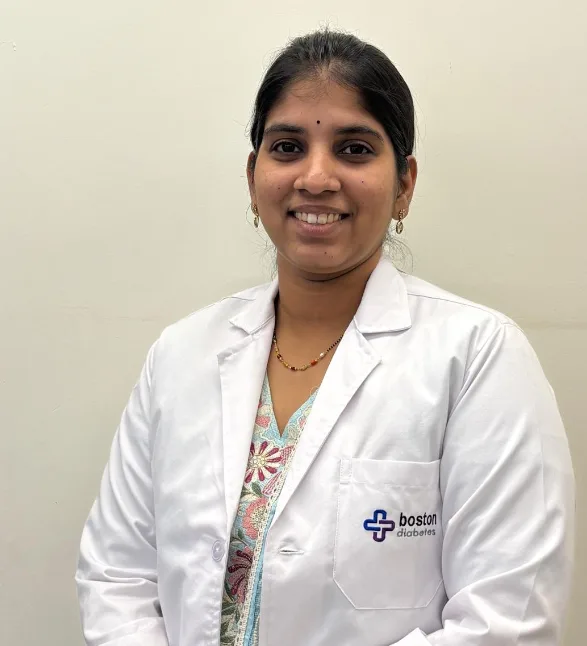
Dr. Likhitha Popuri

Dr. Pavan Thondapu

Dr. Suresh Babu P.

Dr. K. Hari Krishna

Dr. Kiran Kumar Mukku
Guided by the Boston Standard.
Our gastroenterology pathways are reviewed by U.S. medical advisors based in Massachusetts — physicians and scientists with decades of expertise in clinical medicine, metabolic complications of diabetes, and the systemic drivers of fatty liver disease.



Co-founder, Muljibhai Patel Urological Hospital. Past President, World Endourological Society. 750+ scientific papers.

Tufts University faculty. St. Elizabeth's Medical Center. 150+ publications in urology and neuro-urology.

Former Assistant Professor of Surgery, Harvard Medical School. 35+ years clinical practice. Multiple clinical trials.
Patients who reversed it.
My ALT was 78. Ultrasound showed grade II fatty liver. Three different doctors said “it’s nothing, just lose weight.” Boston Diabetes built me a structured plan. Eight months later my ALT is 24, fatty liver is gone on ultrasound, and my HbA1c dropped from 8.9 to 6.4.
I had been on PPIs for six years for acidity. Always felt bloated. They actually evaluated me — found gastroparesis from diabetes. Adjusted my diabetes meds, retitrated the PPI, gave me a structured eating plan. The bloating is gone and I am off PPIs for the first time in years.
I had no symptoms. Just a routine LFT showed mildly elevated enzymes. Boston Diabetes ran the FIB-4 score and found early NASH — not just plain fatty liver. Six months on the right plan and my enzymes are normal. Most doctors would have ignored it.
Everything diabetic patients ask about liver & gut care.
Yes — fatty liver disease (NAFLD) is one of the most reversible chronic conditions in medicine. Through structured weight loss (5–10% of body weight), tight blood-sugar control, dietary changes (Mediterranean-style adapted to Indian food), and targeted medications when indicated, liver fat can be reduced or eliminated and liver enzymes brought back to normal. Reversal becomes harder once fibrosis (scarring) has begun, which is why we screen and treat early.
The link is so strong that diabetic fatty liver is now considered a metabolic disease, not just a separate liver problem. Roughly 70% of patients with type 2 diabetes have some degree of fatty liver. Insulin resistance drives both conditions, which is why treatment must address both together. This is why a diabetes-focused gastroenterology clinic is the right place — not a pure liver clinic.
NASH (Non-Alcoholic Steatohepatitis) is the inflammatory form of fatty liver disease. Unlike simple fatty liver, NASH causes ongoing liver injury that can progress to fibrosis, cirrhosis, and even liver cancer. NASH is dangerous — but it is treatable. The earlier it is diagnosed and the metabolic drivers addressed, the better the long-term outcome. We screen for NASH using liver enzymes, FIB-4 scoring, and FibroScan when indicated.
If you have diabetes, see a gastroenterologist if any of these apply: elevated liver enzymes (ALT or AST above normal), an ultrasound showing fatty liver, persistent acidity or GERD, recurring bloating or abdominal discomfort, unexplained weight changes, or persistent diarrhea or constipation. Diabetics should also screen for fatty liver annually — even without symptoms — because it is silent in early stages.
Boston Diabetes is a day-care gastroenterology clinic. We perform initial assessment, non-invasive diagnostics (FibroScan coordination, ultrasound coordination, breath tests), and long-term management. For endoscopy, colonoscopy, or other procedural diagnostics, we coordinate with specialist procedural centers and review results with you in clinic — so you keep one team and one care plan.
Diabetic fatty liver is managed through an integrated metabolic approach: tight blood-sugar control, structured weight loss (5–10% of body weight), Mediterranean-style diet adapted to Indian food, treatment of dyslipidemia, and newer medications including specific GLP-1 agonists and SGLT2 inhibitors that have shown direct liver benefits. We monitor liver enzymes and fibrosis markers (FIB-4, FibroScan) over time — not just symptoms.
GERD and acidity in diabetics are often well-controlled rather than “cured.” Treatment combines proton-pump inhibitors when indicated, dietary changes, weight management, addressing diabetic gastroparesis if present, and sleep-position adjustments. Most patients see significant symptom improvement within 4–8 weeks of structured treatment, and many can step down or stop PPIs once underlying drivers are addressed.
Initial 30-minute gastroenterology assessments are offered as a free consultation by phone or WhatsApp. In-clinic assessments and diagnostic panels (LFT, FIB-4, ultrasound coordination, FibroScan if indicated) are priced transparently — our team will share rates before you book.