
Boston Diabetes · Gachibowli
Diabetic Kidney Disease Care in Hyderabad
Specialist evaluation of creatinine, eGFR, urine albumin and blood pressure, reviewed together and as trends over time.
Kidney function can change gradually in diabetes, often without symptoms. A specialist evaluation puts your reports, blood pressure, urine findings and treatment history into context.

Kidney health is more than one number.
- CreatinineBlood marker of kidney filtration
- eGFREstimate of filtering capacity
- Urine ACRAlbumin in urine, often an early marker
- Blood pressureClosely linked with kidney health
The kidney picture
When Diabetes Affects Kidney Health
Each kidney contains around a million tiny filters called nephrons. Over years, raised blood sugar and blood pressure can strain them. Changes are usually gradual and often cause no symptoms, so blood and urine tests, read together, show what is happening.
- Creatinine
- eGFR
- Urine ACR
- Blood pressure
- HbA1c and glucose
Abnormal kidney markers may warrant further clinical evaluation. A single result is not a diagnosis.
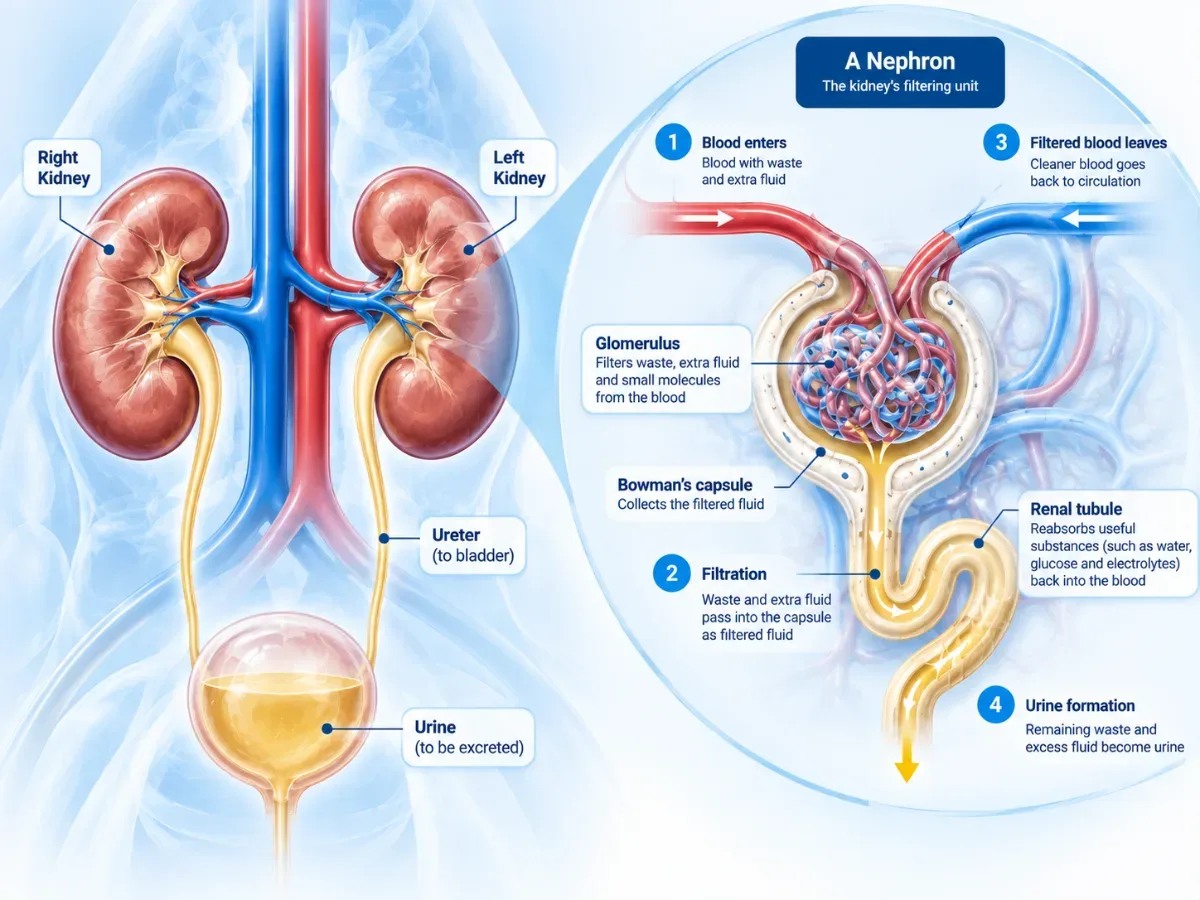
The evaluation
A Diabetic Kidney Disease Evaluation, in Six Parts
Tests are chosen when clinically appropriate. Not every test is needed for everyone.

- 01
Blood tests
Creatinine, eGFR and urea where relevant.
- 02
Urine assessment
Urine ACR, urine protein and urinalysis.
- 03
Metabolic control
HbA1c and glucose trends.
- 04
Blood pressure
Clinic readings, and home readings if available.
- 05
Medication review
Medicines, doses, timing and history.
- 06
Other factors
Diabetes duration, heart risk and medical history.
Protein in urine
Protein in Urine Deserves Context
Albumin in the urine can be an important finding in diabetes. What it means depends on three things.
How much
The amount of albumin found.
Whether it persists
Repeat testing matters, since one result can vary.
The overall picture
eGFR, blood pressure and diabetes control, together.
The connection
Diabetes, Blood Pressure and Kidneys Are Connected
Long-term raised sugar can strain the kidneys' filters, raised blood pressure adds strain, and kidney function shapes which medicines and doses are suitable. Where sugar or BP control is the main concern, see Diabetes & BP care.
A review may be appropriate when
- Creatinine or eGFR has changed between reports
- Albumin or protein has been found in the urine
- Blood pressure stays high despite treatment
- Medicines need reviewing for kidney function
Doctors
Kidney and Diabetes Specialists
Dr. Kiran Kumar Mukku
MD, DM Nephrology & Renal Transplantation
Nephrology
Kidney function and kidney-related factors
Dr. Siva Prasad Reddy
MD
Diabetes & Metabolic Medicine
Diabetes and metabolic review
Dr. Ram Kumar G.
MD
Internal Medicine & Diabetes
Medical review and ongoing care
Questions
Diabetic kidney disease: common questions
What is diabetic kidney disease?
Kidney damage associated with diabetes, also called diabetic nephropathy. It usually develops gradually over years and is often picked up through blood and urine tests rather than symptoms.
How is diabetic kidney disease evaluated?
The consultant reviews creatinine and eGFR, urine albumin (ACR), blood pressure, diabetes control, medicines and medical history, ideally as trends over time. Further tests are recommended only when clinically appropriate.
What do creatinine and eGFR show?
Creatinine is a blood marker of how well the kidneys filter; eGFR is an estimate of filtering capacity calculated from it. Creatinine can stay within the normal range in early kidney changes, which is why urine albumin is usually checked too.
What is urine ACR?
The urine albumin-to-creatinine ratio measures albumin, a protein, in a urine sample. What a raised result means depends on the amount, whether it persists on repeat testing and the overall picture, so one result is not a diagnosis.
How often should kidney tests be done with diabetes?
eGFR and urine ACR are commonly checked at least once a year, and more often if results are abnormal. Your doctor will advise the right interval for you.
Will my medicines be changed?
Any change is decided by the treating consultant after reviewing your reports and kidney function. Some medicines need dose adjustment for kidney function, so bring a complete list and do not change medicines on your own.
Other specialist care at Boston Diabetes
- Diabetes & BPUncontrolled sugar levels, difficult-to-control blood pressure and related metabolic concerns.
- Thyroid & ObesityThyroid evaluation, autoimmune thyroid care and physician-led medical weight management.
- Foot & Nerve CareDiabetic foot ulcers, neuropathy, burning, tingling and nerve-related foot concerns.
Book and visit
Bring your kidney reports to Boston Diabetes, Gachibowli
- Address
- 1st Floor, above Ratnadeep Supermarket
Lumbini Avenue, Gachibowli
Hyderabad, Telangana 500032 - Landmark
- Near Biodiversity Park, Gachibowli
- Hours
- Monday to Saturday, 8:00 AM to 8:00 PM
- Phone
- +91 80086 72097
- Parking
- Parking available at the building

Your details
Three details. No medical history needed.