
Boston Diabetes · Gachibowli, Hyderabad
Specialist Diabetes & Complication Care in Hyderabad
A diabetes-focused specialty centre in Gachibowli, where diabetes, metabolic, kidney and nerve specialists review the whole picture together.
Outpatient and day care consultations, with laboratory tests and imaging coordinated through partner facilities.
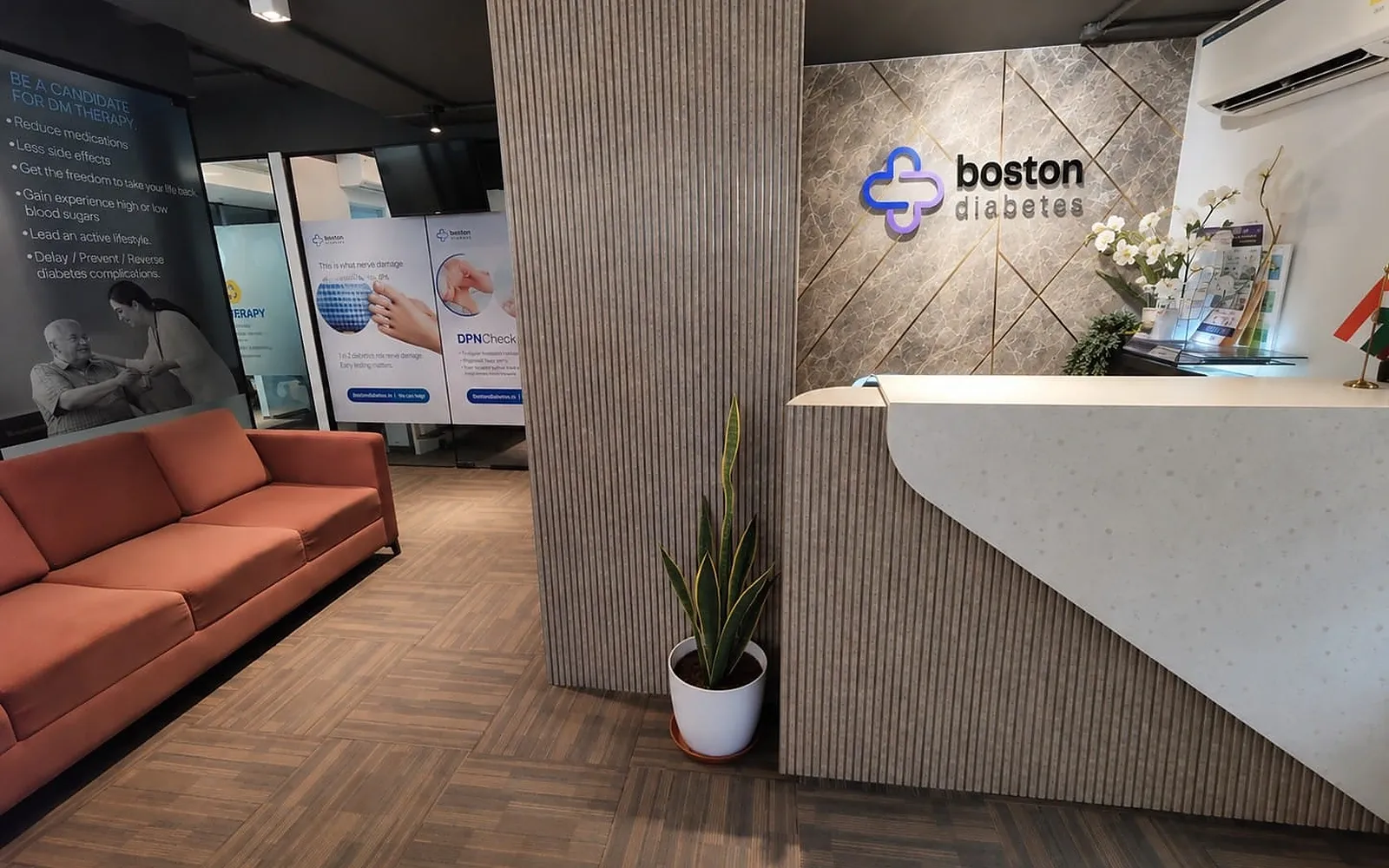
Four specialist care pathways.
- Diabetes & BPSugar and BP control
- Thyroid & ObesityThyroid and metabolic care
- Kidney HealthDiabetes-related kidney health
- Foot & Nerve CareFoot ulcers and neuropathy
Specialist care
Explore Specialist Care
Each pathway starts with a focused evaluation and a plan built on what it finds.
- 01
Diabetes & BP
Uncontrolled sugar levels, difficult-to-control blood pressure and related metabolic concerns.
Learn more - 02
Thyroid & Obesity
Thyroid evaluation, autoimmune thyroid care and physician-led medical weight management.
Learn more - 03
Kidney Health
Assessment and management of diabetes-related kidney concerns.
Learn more - 04
Foot & Nerve Care
Diabetic foot ulcers, neuropathy, burning, tingling and nerve-related foot concerns.
Learn more
About Boston Diabetes
Diabetes and Its Complications, Reviewed Together
Diabetes can affect blood pressure, the kidneys, the nerves and the feet. At Boston Diabetes, these are assessed within one centre by specialists who share the same records, so treatment decisions take the whole picture into account.
- Specialist teamDiabetes and metabolic medicine, internal medicine, nephrology and neurology.
- Guideline-based careADA diabetes standards and KDIGO kidney guidelines, adapted to each patient.
- Objective nerve testingDPNCheck nerve conduction assessment when clinically indicated.
- Honest scopeOutpatient and day care; tests and inpatient care coordinated with partner facilities.
Doctors
Our Specialists
Dr. Siva Prasad Reddy
MD
Diabetes & Metabolic Medicine
Diabetes and metabolic medicine
Dr. Ram Kumar G.
MD
Internal Medicine & Diabetes
Internal medicine and ongoing care
Dr. Kiran Kumar Mukku
MD, DM Nephrology & Renal Transplantation
Nephrology
Kidney care in diabetes
Dr. Suresh Babu P.
MD, DM Neurology
Neurology
Nerve and sensation assessment
Care follows ADA and KDIGO guidelines. A US-based Clinical Advisory Board supports protocol review in an advisory capacity only; advisors do not see patients.
Questions
Before your first visit
Which care pathway is right for me?
Choose the concern closest to your reason for visiting. The coordinator will confirm which specialist to see, and many patients are reviewed by more than one member of the team.
What should I bring?
Recent reports (HbA1c, kidney function and any others you have), older reports if available, and a complete list of current medicines with doses.
Do you have inpatient beds or an in-house laboratory?
No. Boston Diabetes is an outpatient and day care specialty centre. Laboratory tests, imaging and any inpatient or surgical care are coordinated through partner facilities in Hyderabad.
Can a family member book the appointment?
Yes. Many appointments are arranged by family members, who can bring the patient's reports and medicine details.
Book and visit
Visit Boston Diabetes, Gachibowli
- Address
- 1st Floor, above Ratnadeep Supermarket
Lumbini Avenue, Gachibowli
Hyderabad, Telangana 500032 - Landmark
- Near Biodiversity Park, Gachibowli
- Hours
- Monday to Saturday, 8:00 AM to 8:00 PM
- Phone
- +91 80086 72097
- Parking
- Parking available at the building
Your details
Three details. No medical history needed.